

18.11.25
The Jazz Promotion Network aims to advance and support professional development, information exchange and partnership opportunities for the UK & Irish jazz industry, artists and audiences. It’s a collaborative network that enables the diverse UK & Irish jazz sector to thrive, innovate and inspire. Their conference took place in Cardiff, Wales on Thursday 6th and Friday 7th November, hosting 207 musicians, educators, students, promoters and other jazz professionals. Jointly hosted by Cardiff University Music Department and the Royal Welsh College of Music and Drama (RWCMD), the conference achieved the highest attendance numbers to date, including many first-time delegates. One of those 207 was our budding Youth Advisory Board Member, Finn Muir-Cochrane. Discover how he found his time below.
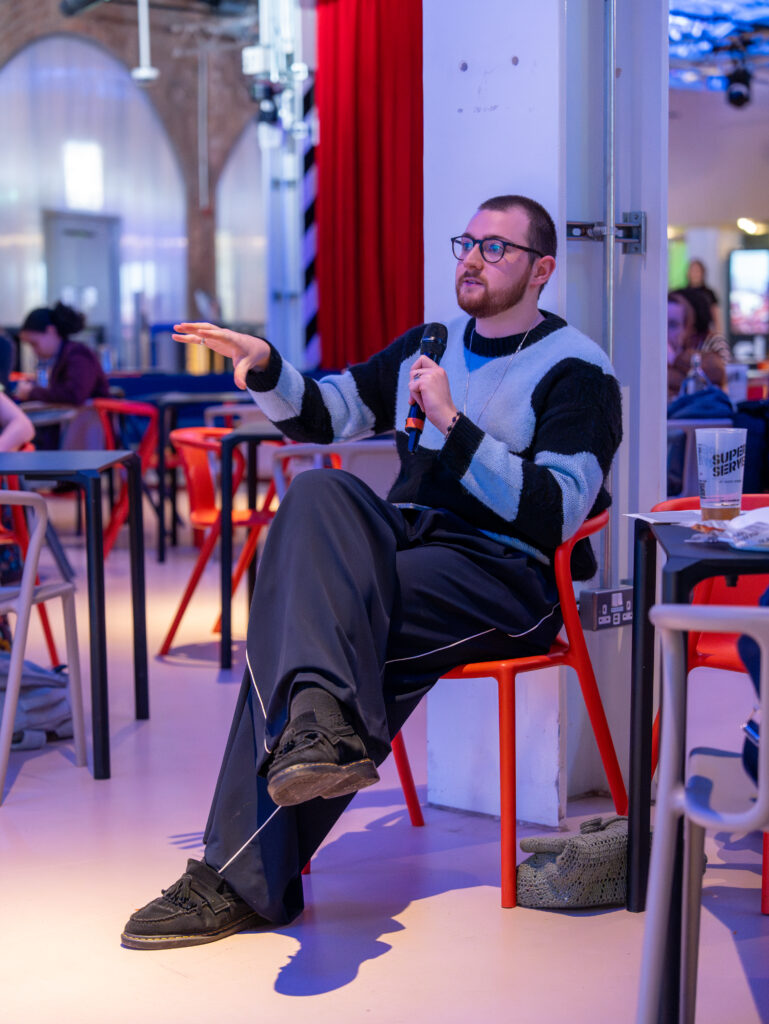 “This was my first time at the Jazz Promotion Network conference, and at the start I definitely felt a bit out of my depth. There were people in the room who have been shaping festivals and venues for years, and it was hard not to be aware of that. But quite quickly I realised how small the jazz world can be — I kept spotting people I’d met through mjf or crossed paths with in different projects. That familiarity made the space feel a lot more approachable.
What I appreciated most was how open the conversations were. People spoke honestly about the challenges they’re facing, as well as the things they’re excited about. Nothing felt polished or overly formal. Whatever the topic was, there was a sense that people genuinely wanted to share experiences and learn from each other.
There was also a clear willingness to collaborate. Promoters, venues, artists, and organisers all seemed interested in supporting one another, rather than protecting their own corners. As someone attending on behalf of the mjf Youth Advisory Board, it was encouraging to see that younger voices can fit naturally into those discussions. It didn’t feel like trying to break into a closed room — more like joining a community that’s figuring things out together.
What struck me most across the day was how each session felt like a small window into the tensions and possibilities shaping the future of jazz — and how often those conversations circled back to people, power, and access.I kept noticing the points that echoed questions we ask in our meetings: Who gets in? Who gets heard? And who decides?
What I’m Bringing Back to mjf
Sitting through the sessions, I kept thinking about how the ideas being discussed could shape the work we do on the mjf Youth Advisory Board. A lot of the conversations — especially around programming, inclusivity, and grassroots support — made me rethink what it means to open doors for people rather than just talk about it in theory.
The programming session reminded me how many artists never make it past the first stage of being seen. The idea of working more closely with venues feels relevant to us too. They know which emerging artists are building real connections with their communities, and they often spot talent long before any formal application process does.
The inclusivity session had the strongest impact. Learning about “Penguin Pebbling” gave me a practical way to think about how we create space for neurodivergent young people. Not everyone thrives in loud or fast-moving networking environments, and we don’t have to pretend that they do. Small gestures, quieter introductions, and slower ways of building trust might help more young people feel comfortable getting involved with us.
The panel’s advice about reaching out to Black-led organisations and grassroots groups also stayed with me. It was a reminder that diversity doesn’t happen by waiting for people to arrive. It happens when you go to where people already are, listen properly, and build relationships rather than expecting communities to find you. This feels like a clear next step for the Youth Advisory Board — not a big statement, but a practical shift in how we meet people.
In all of these conversations, I could see ways for the Youth Advisory Board to become more open, more representative, and more responsive to the realities young people face. It feels less like adding new tasks and more like adjusting the way we approach the work we already care about.
Closing Thoughts
Leaving the conference, I felt a mix of realism and optimism. The conversations made it clear that the industry is facing genuine challenges — around access, decision-making, resources and representation — and no one pretended otherwise. But what also came through strongly was a willingness to talk honestly about these problems, rather than avoid them or dress them up.
I saw people who care about the future of jazz and are trying to make meaningful changes, even if the pace is uneven. Some areas are moving forward — more awareness around inclusive practice, more interest in working collaboratively, and a clearer understanding of how structural issues affect artists and communities. At the same time, there are places where progress is still slow, particularly when it comes to who holds power and whose voices are listened to.
As someone coming in as a younger representative, it was helpful to see both sides of this. It’s encouraging to know that many people in the sector genuinely want things to improve, but it’s also important to recognise where intentions haven’t yet turned into action. That balance feels necessary if we’re going to keep pushing things in a better direction for arts in the UK and Ireland.
Finn is a member of our youth advisory board, helping to shape the future of our festival. Learn more about the work they do here.